


Questionnaire on "HR no mikata," an information site for personnel and recruiters
- The following is content from the press release -
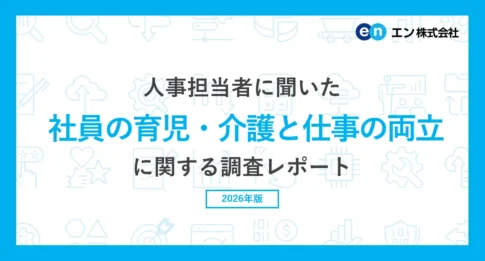
(Headquarters: Shinjuku-ku, Tokyo; Chairman and President: Michikatsu Ochi) has launched "HR no Mikata," an information site for human resources and recruiting managers ("HR no Mikata").https://partners.en-japan.com/In addition, we conducted a survey of corporate human resource managers on "balancing work and childcare/nursing care for employees," and received responses from 239 human resource managers (from 239 companies). The following is a summary of the survey.
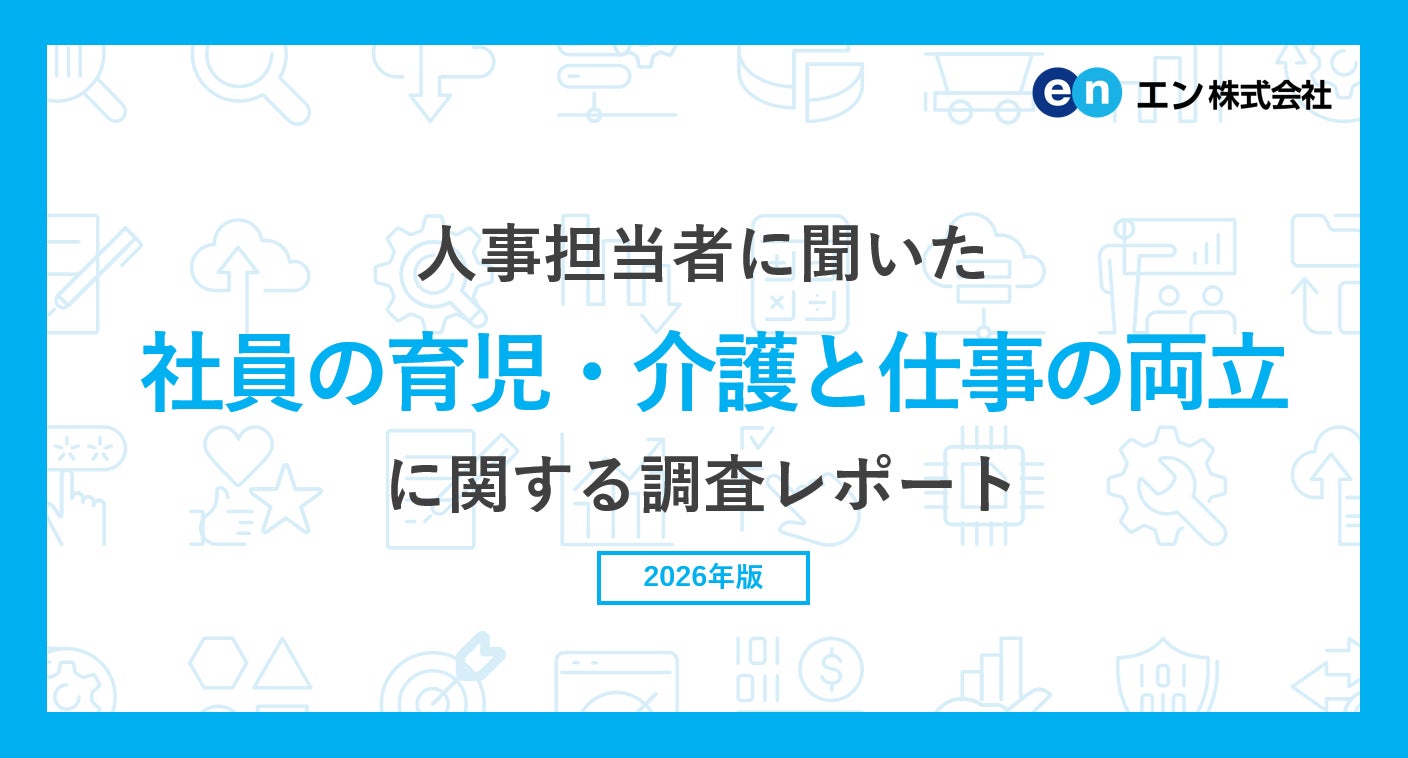
Results Overview
- One in three companies has an employee who is a caregiver; more than 60% of companies with 1,000 or more employees fall into this category. 10% of companies with 100 or more employees have employees who both provide childcare and nursing care.
- The revised Child Care and Family Care Leave Law was positively evaluated by 90% of HR managers. On the other hand, "securing substitute personnel" and "division of work" are the two major issues in the field.
- The most frequently introduced systems to support work-life balance are "shorter working hours," "change of starting time," and "exemption from overtime work. There is a gap between the introduction rate and the utilization rate for "overtime exemption.
Survey Results Details
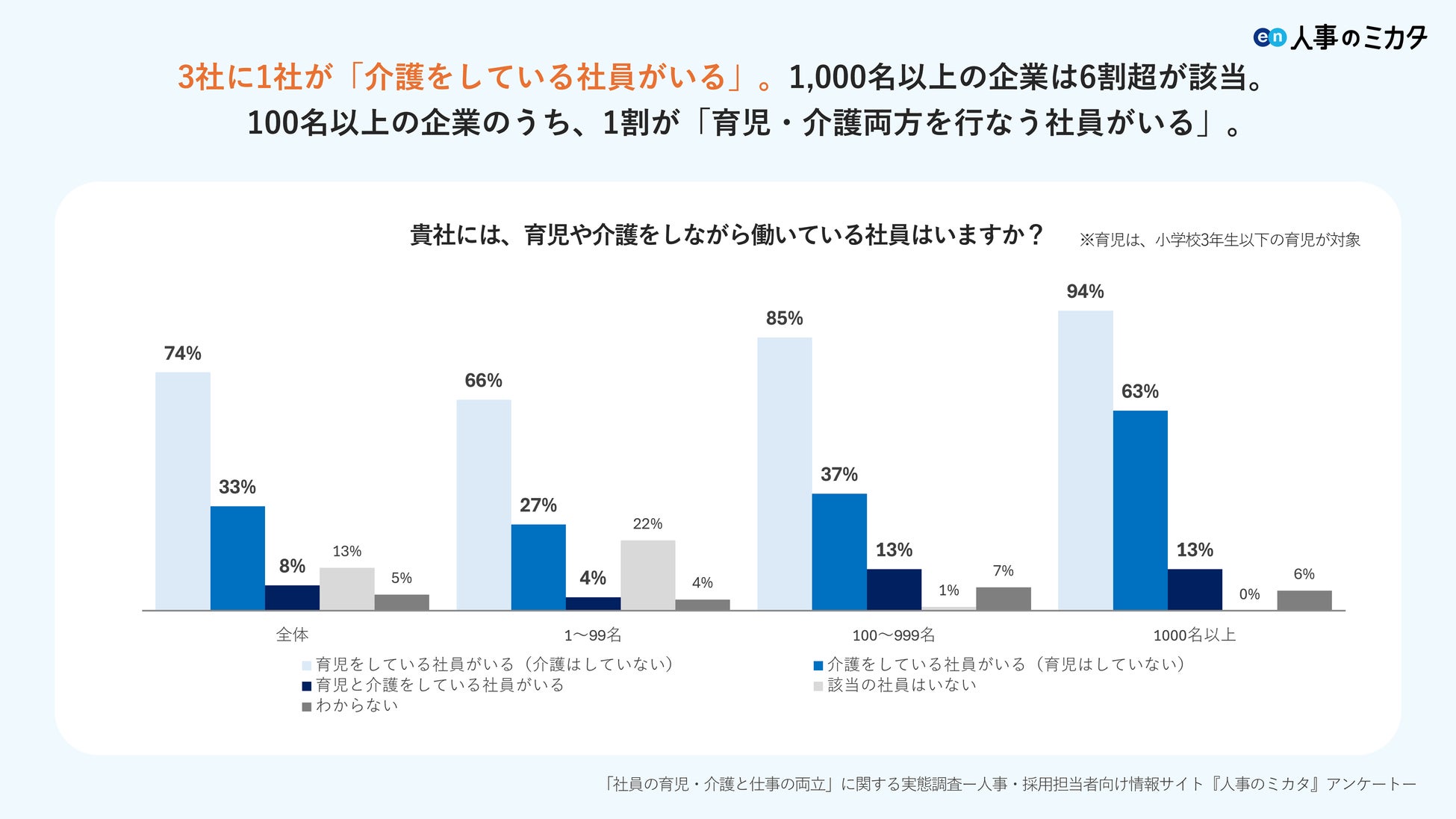
1: One in three companies has an employee who is a caregiver; more than 60% of companies with 1,000 or more employees fall into this category. 10% of companies with 100 or more employees have an employee who is both a childcare and caregiver. (Figure 1)
When asked whether they have employees working while raising children or caring for family members, 74% said they have employees raising children (but not caring for family members), 33% said they have employees caring for family members (but not raising children), and 8% said they have employees who are both raising children and caring for family members. More than 30% of the companies had employees who were nursing caregivers, and 63% of the companies with more than 1,000 employees fell into this category.
[Figure 1
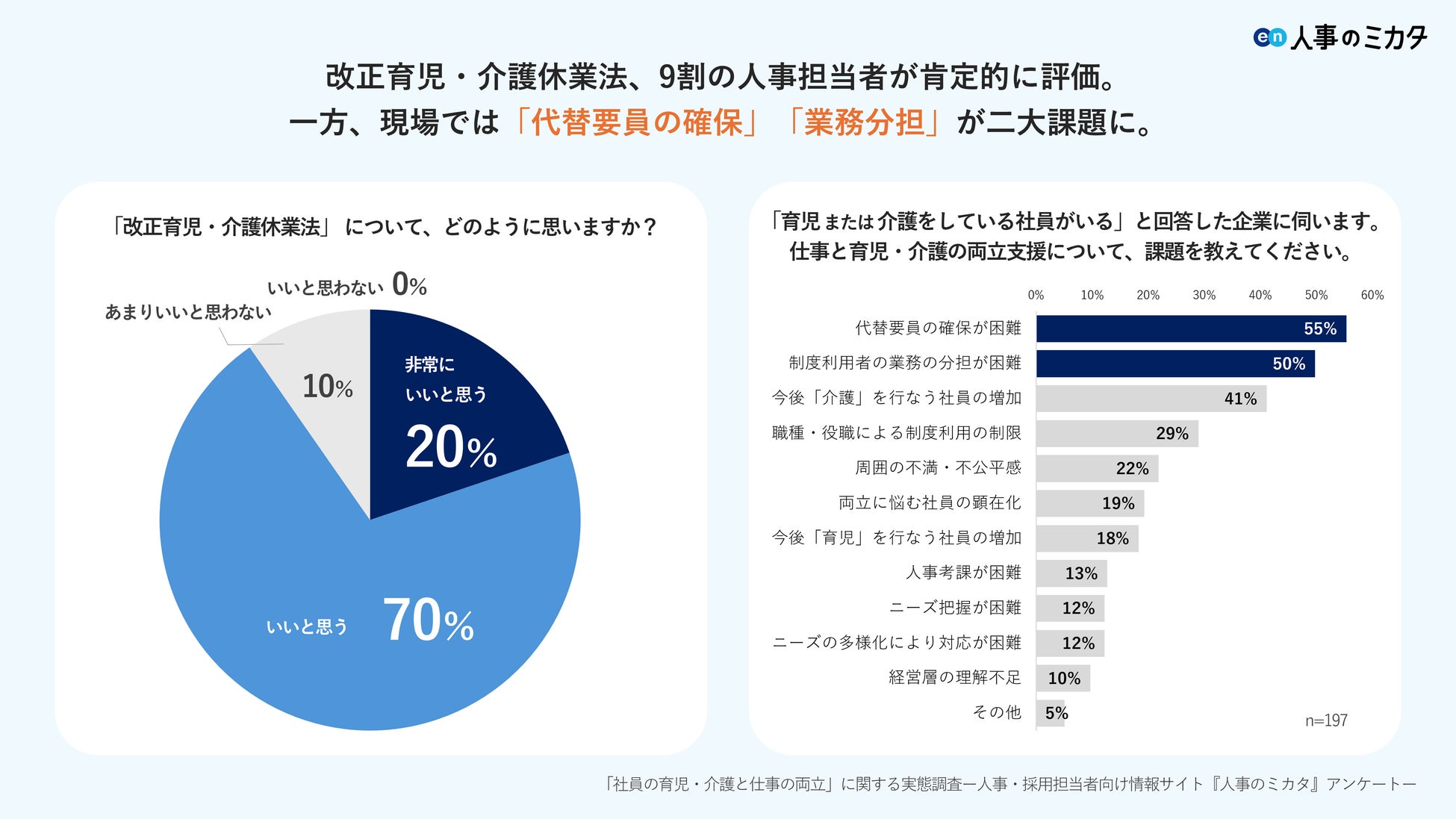
2: The revised Child Care and Family Care Leave Law was positively evaluated by 90% of HR managers. On the other hand, "securing substitute personnel" and "division of work" are the two major issues in the field. (Figure 2)
When asked what they thought of the "Revised Child Care and Family Care Leave Law," which came into effect in phases in April and October 2025, a total of 90% responded positively, with 20% saying they thought it was "very good" and 70% saying they thought it was "good. When companies that responded that they have employees who are raising children or caring for family members were asked about issues related to support for balancing work and childcare/nursing care, 55% said "difficulty in securing replacement personnel" and 50% said "difficulty in assigning work to those using the system". Specific comments on these issues are also presented below.
[Figure 2
Q. Please tell us about issues related to support for balancing work and childcare/nursing care. (Figures in parentheses indicate industry/company size.
In order to create a comfortable working environment for both employees, it is necessary to secure a sufficient number of employees, but it is difficult to balance the current workload with the number of employees. (However, it is difficult to find a balance between the current workload and the number of employees.)
Since there are many professionals, it is difficult to fill in for those who take a leave of absence, which means that the work will be unevenly distributed among the remaining members. (IT/Internet related/ 10-29 employees)
Nursing care tends to overlap with the career-building period in the 40s and 50s, making it difficult to evaluate. (Trading company/ 30-49 persons)
If turnover increases, the system will become unavailable due to a lack of manpower, even if the system exists. The company is taking all possible measures to prevent turnover, not only by establishing and thoroughly operating the system, but also by reviewing benefit packages and improving compensation. (Distribution/retail related/50-99 employees)
We would like to introduce the system, but there are persistent comments from employees who are not eligible for the system that it is unfair, etc. First, we would like to improve the paid leave utilization rate. (Trading company / 100-299 employees)
The average age of employees is high and the population is aging rapidly, so we feel a crisis if we don't review the system now regarding leaving the nursing care system. (Service related / 100-299 employees)
Currently, 1.5% of all employees use the childcare/nursing care system, and we are able to meet all of their requests by reassigning them and using the mutual support system across departments, but if the number increases in the future, it may become difficult to meet all of their requests (we expect that we will be forced to hire and assign new part-time workers). (We anticipate that we will be forced to hire and assign new part-time workers). Although it is still several years away, we are working on concepts and case studies from the current stage. (Manufacturer / 100-299 employees)
In addition to those who have official certification that they need nursing care, etc., an increasing number of employees are in situations where they "need support" or "live in an institution" when caring for relatives. The most recent concern is how to respond to these people and expand the criteria for using the system. (Trading company / 300-999 employees)
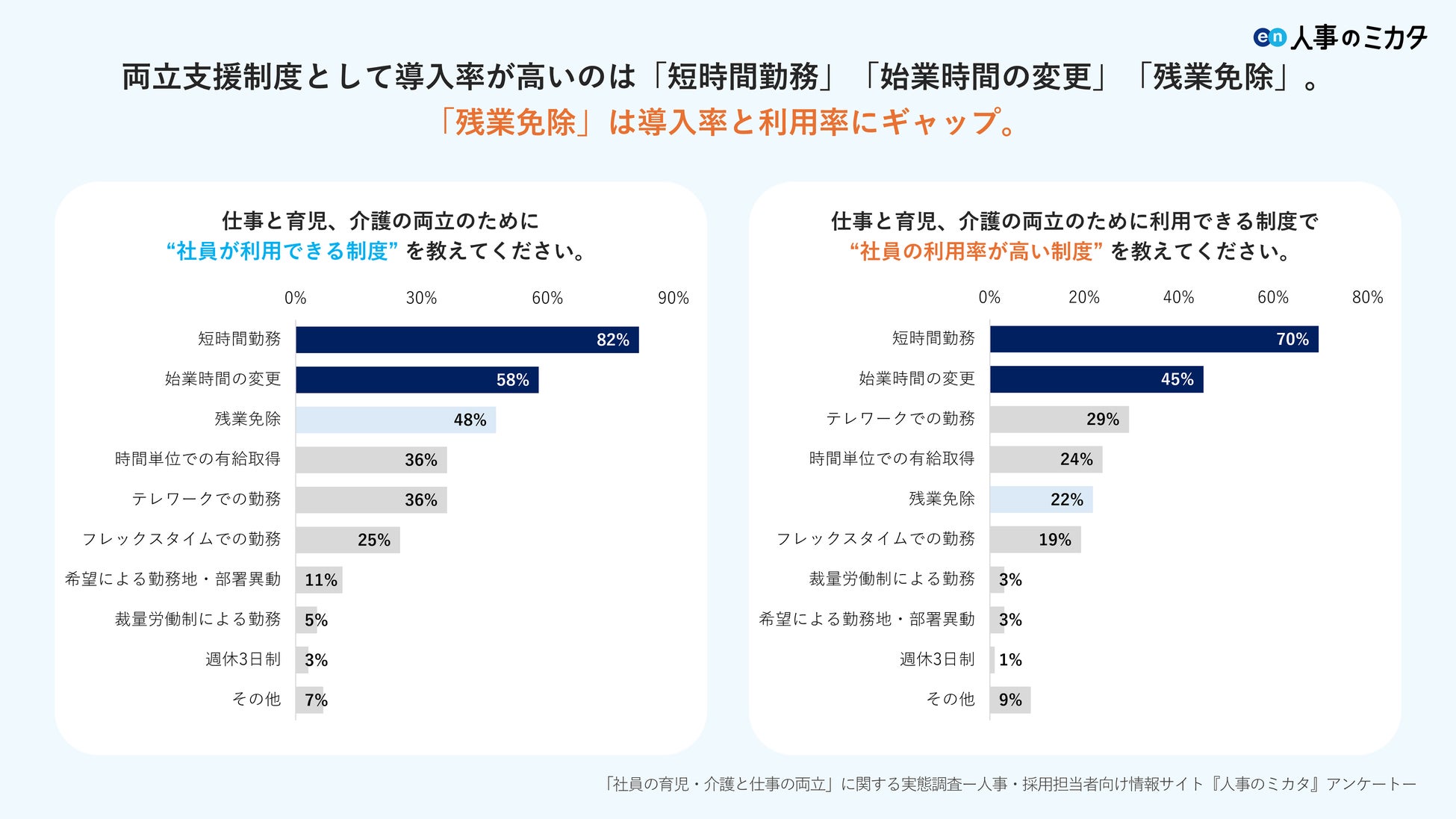
3: "Shorter working hours," "Change in starting time," and "Exemption from overtime work" were the most frequently introduced support systems for balancing work and family life. The gap between the introduction rate and the utilization rate of "Overtime work exemption" is small (Figure 3). (Figure 3)
We asked companies that responded that they have employees who are raising children or caring for family members what systems are ”available” and ”highly utilized” for balancing work and childcare/nursing care. The top two systems in terms of both availability and utilization were "shorter working hours" (82% available, 70% highly utilized) and "change of starting time" (58% available, 45% highly utilized).
The third most available system is "overtime exemption" (48%), which is introduced by about half of the companies, but the system with the highest utilization rate comes in fifth at 22%, indicating a gap between the rate of introduction and the rate of utilization.
[Figure 3
Survey Summary
■Survey method: Internet questionnaire
■Survey period: November 18 - December 8, 2025
Surveyed by: "Personnel Mittal" (Japanese only)https://partners.en-japan.com/Companies that use the
Number of valid responses: 239 companies
Search here first when you are in trouble. Information site for personnel and recruiters "HR no Mikata".
https://partners.en-japan.com/
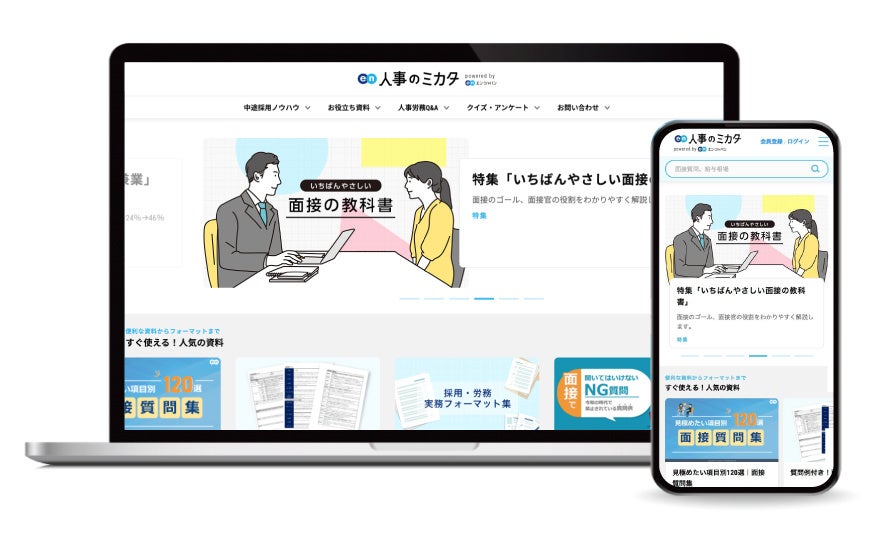
This is a membership service for those in charge of human resources and recruiting who want to know how to conduct recruitment interviews and how to respond to job seekers. This is an information site that can be utilized in a variety of situations, such as gathering information on recruitment interviewing, training, and evaluation know-how and legal revisions, downloading labor-related forms, and registering for free seminars.
Press Release Download
d725-1170-acbb8f25da93e7e00bf5ce73ae71e22f.pdf

EN Corporation
Public Relations
tel: 03-3342-6590
E-mail:en-press@en-japan.com