


- The following is content from the press release -
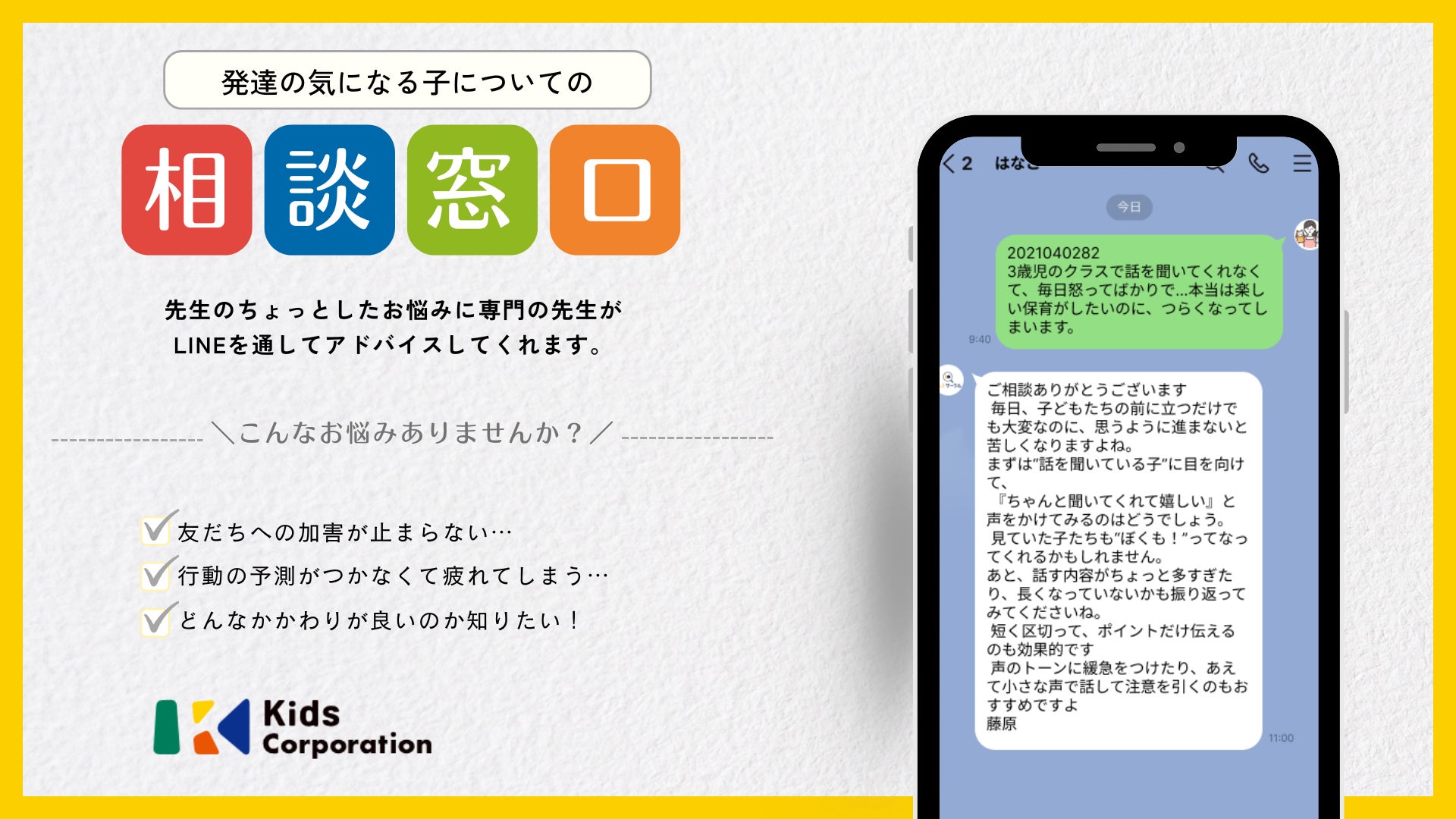
(Head Office: Minato-ku, Tokyo; Representative Director: Susumu Kamano) has begun full-scale operation of the "Consultation Service for Developmentally Supported Children" from 2026, where childcare professionals who are concerned about development and how to relate to children in childcare settings can easily consult with specialists.
This window is a system that allows childcare workers who deal with children on a daily basis to consult directly with a clinical developmental psychologist.
In childcare settings, developmental concerns such as picky eating, obsessive behavior, and group participation arise on a daily basis. However, there are many cases in which individual childcare workers are concerned about whether the current support is adequate or not, or do not know who to consult with.
This service was started with the cooperation of Dr. Satomi Fujiwara, a clinical developmental psychologist, with the aim of providing tips on how to think about and relate to children's development from a specialist's point of view. The service has already received a number of consultations. Several consultations have already been received, and the practical advice has led to support in the field.
Expert Profile
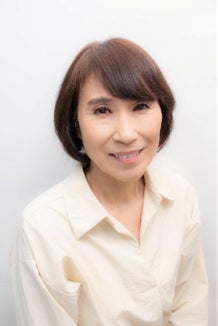
Satomi Fujiwara, Clinical Developmental Psychologist
Clinical developmental psychologist, early development support coordinator SV, and childcare worker. With an emphasis on practice, she works to bring peace of mind to children, families, and supporters who need support in childcare and rehabilitation settings.
She has been an instructor at career development training (childcare for children with disabilities) organized by the Japan Childcare Association, the Society for Supporting Early Development of Children and Families, and various regional nursery school associations. He has published many books, including "Developmental Support for Diverse Children," "Handmade Sensory Toys for Children with Developmental Disabilities to Play with," and "Social Skill Play for Children with Developmental Concerns. She has also written practical books, workbooks, and a series of articles on developmental disabilities and autism spectrum disorders.
Childcare Settings Supported by Dr. Fujiwara's Expert Perspective - Dealing with picky eaters with a reassuring gaze.
The comments by Dr. Fujiwara, a clinical developmental psychologist, go beyond mere advice and serve as a major guideline to support the childcare practices of teachers who face children with daily concerns.
For example, regarding your concern about your 2 year and 4 month old child's picky eater.
[2 years, 4 months old, boy / Food bias.
At school lunch, they eat only rice with miso soup and do not touch the side dishes. On udon days, only plain udon is served. He has recently been able to eat small amounts of fried food, but we are struggling with the direction of cooperation and support with the family....
In response to the above concerns, Dr. Fujiwara gave us his expert opinion that picky eating at this stage is not "not eating," but rather "a developmental form of trying to follow a secure way of eating. This professional response alleviates the anxiety and impatience of caregivers and reassures them that they can "accept the current state of the child.
In this case.
Do not force them to eat,
- Protecting what is eaten as a "pillar of security".
- Start with the experience of becoming familiar with new foods, not with the “purpose” of feeding them.
- To have a common understanding between the preschool and the family that we do not encourage them to do so.
Specific advice was given that can be immediately put into practice in the field, such as
This specific advice can not only be put into practice immediately in the field, but also serves as a foundation for caregivers to work with children with confidence.
With the help of the expert's gaze, the perspective changes from "How can I feed them?" to "How can I make them feel safe?" and childcare based on an understanding of the child becomes more profound.
Creating an environment where childcare workers can face childcare with peace of mind
Furthermore, from the parks that have received such advice,
We shared your guidance with all staff at our own school and also in writing with the parents involved.
The results were immediate. First of all, they no longer blame themselves for not eating, and mealtime seems to be more enjoyable. Parents also reported, ”Lately, I've seen more and more children try to put the food in their mouths. and ”I've been putting more food in my mouth. We were also pleased to hear that the number of foods they can eat has been gradually increasing recently, and that "they seem to be more willing to put a little tomato in their mouths. The nursery staff is happy to know that the children are gradually growing through these exchanges.
Reports of confident parents and their children's growth have also been coming in, such as
From these efforts, Kids Corporation will continue to provide support to the field as a system that supports "childcare that does not suffer alone.
Company Information
Kids Corporation

Representative Director: Shinji Kamano
Head Office: Sumitomo Fudosan Hibiya Bldg. 10F, 2-8-6 Nishi-Shinbashi, Minato-ku, Tokyo
Established: December 1, 1993
HP:https://www.kids-21.co.jp/