


- The following is content from the press release -
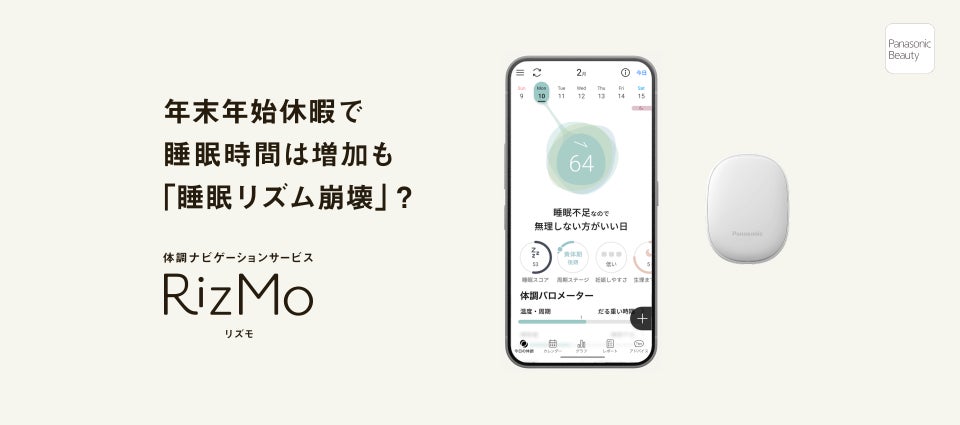
Panasonic Corporation conducted a survey of 567 users of the "RizMo" (Rizmo) physical condition navigation service to analyze their sleep patterns during the year-end and New Year holidays (December 24th - January 7th). As a result, it was revealed that while sleep time increases during the year-end and New Year holidays, sleep rhythms are easily disturbed.
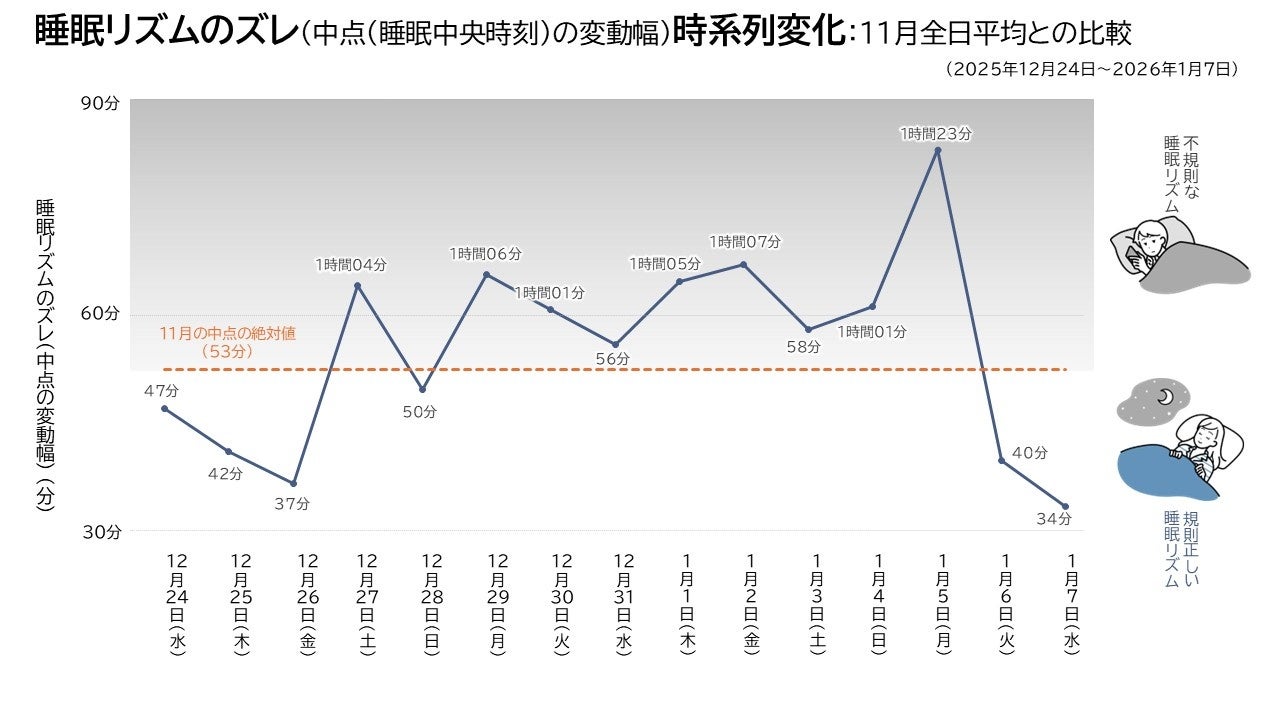
Of particular interest is the fact that the fluctuation of the sleep rhythm reaches its maximum on January 5, the day after the vacation break. This indicates that the increased sleeping hours and disrupted sleeping and waking times during the vacations are rapidly adjusted at the start of the workweek, placing a heavy burden on the body's internal clock.
While long vacations such as the year-end and New Year's vacations allow people to sleep longer than usual, they also tend to disrupt the rhythm of their daily lives. Although the amount of sleep itself increases, it is clear that fluctuations in bedtime and waking time become larger.
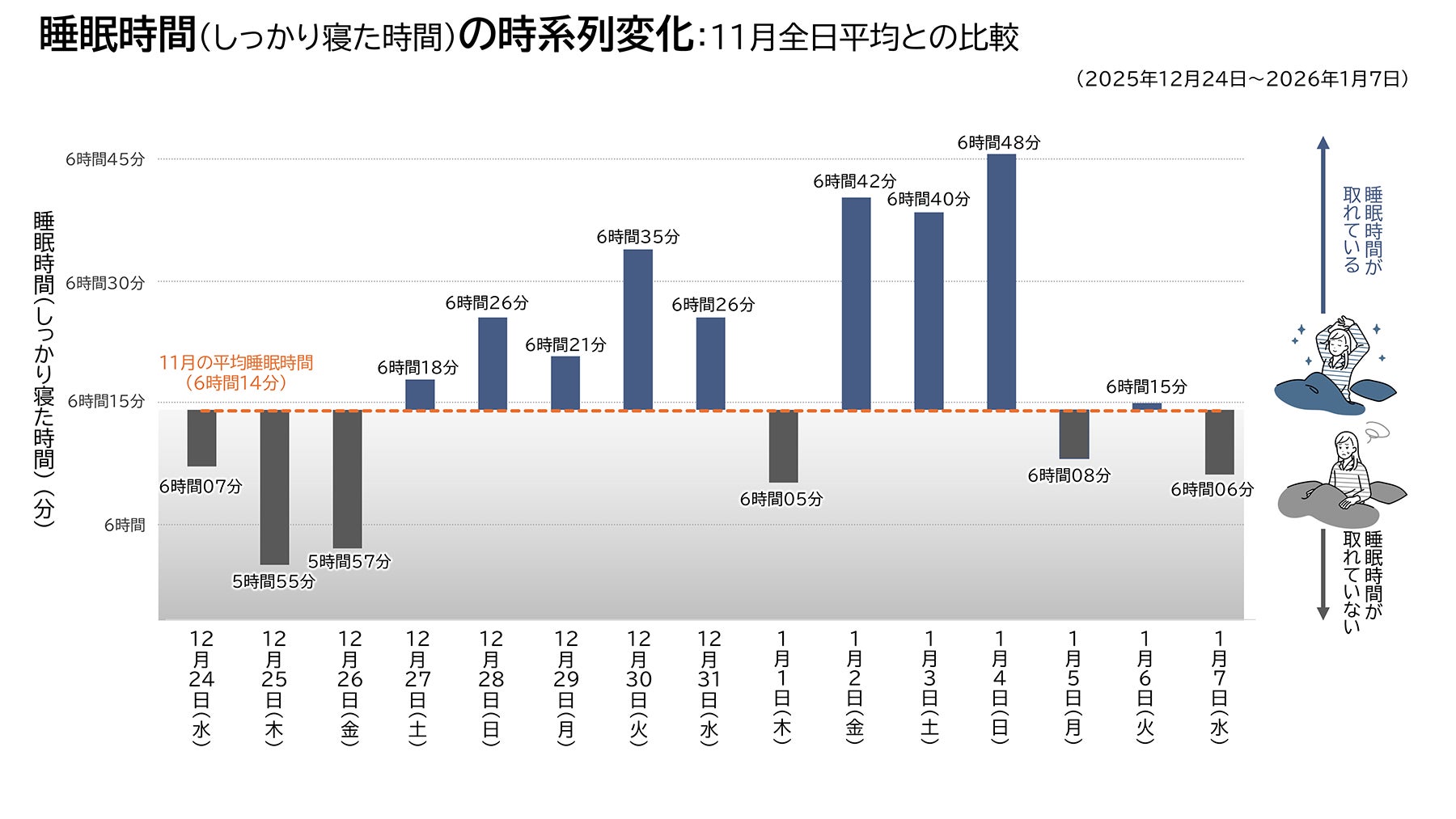
According to the analysis, compared to the average sleep time of 6 hours and 14 minutes in November, the average sleep time was 6 hours and 27 minutes (+13 minutes) at the end of the year from December 29 to 31, and 6 hours and 43 minutes (+29 minutes) at the beginning of the year from January 2 to 4, excluding the night of New Year's Eve, an increase of about 3 to 7% on average (Figure 1). Given that the most common physical health concern among Rizmo users is "sleepiness" (*1), it can be assumed that the weakening of social constraints such as work and school during the vacations allows for sufficient rest for the body and mind. On the other hand, the sleep rhythm (the range of variation between the median times of going to bed and waking up) deviated by an hour or more on average both at the end of the year and at the beginning of the year (Figure 2). It is presumed that the late nights and irregular lifestyles characteristic of the year-end and New Year's holidays have had an impact. It is also noteworthy that the average disruption in sleep rhythm reached a maximum of 1 hour and 23 minutes on January 5, the day after the vacations (Fig. 2). The reason why many people feel that "the beginning of the work week is hard" is thought to be related to the fact that they are trying to rapidly restore the sleep rhythm that was disturbed by the long vacation.
In order to restore a smooth rhythm after a vacation, it is important to "correctly grasp one's sleep displacement and make small adjustments on a daily basis. Rizmo automatically visualizes fluctuations in sleep rhythms and provides advice tailored to each individual. It also helps you adjust your body clock, which was disrupted during the year-end and New Year holidays, by showing you at a glance how much your sleep rhythm has deviated from the previous day's rhythm. By analyzing one's own sleep rhythm, Rizmo will support a comfortable life after the holidays.
Dr. Shuichiro Shirakawa, M.D., President of the Sleep Evaluation Research Organization, comments*.
Received the results of Rizmo's sleep data analysis.

The results of Rizmo's survey show that many women are trying to pay off their sleep debt (*2) during the year-end and New Year holidays, excluding New Year's Eve. On the other hand, we find that their sleep rhythm fluctuates greatly after New Year's Eve, and they try to forcefully return to that disturbed rhythm on the 5th day after the vacations. If the body's rhythms are significantly disrupted during the New Year's vacation, the risk of vacation blur is high, and one may suffer from decreased motivation and performance, distraction, mood swings, insomnia, and gastrointestinal problems. Some women also experience poor sleep before and during menstruation. This is partly due to hormonal imbalance and modulation of the autonomic nervous system, and symptoms are worse when the body's rhythms are disrupted by a long rest.
Sleep advice for long vacations
Always sleep for about four hours around 3:00 a.m., and do not wake up more than one hour later than usual. In the morning, get some fresh light and eat a good breakfast. This will reduce the disruption of your body's rhythms. It is advisable to start this practice not only on the last day of the vacation, but also one or two days before the vacation is over. In addition, the cold of winter is a great enemy of sleep. When your body's rhythms are disturbed, it is important to maintain a comfortable sleeping environment. The desirable sleeping temperature in winter is 16-23°C (61-86°F), and the optimal temperature is 20±1°C (68-86°F). For those who have trouble falling asleep, it is recommended to warm the bedroom and bedding before going to bed, take a bath with the water temperature around 40°C about 20 to 30 minutes before bedtime, and fall asleep in a warm state.
*This is an edited version of a comment we requested and received from our company.
About "RizMo," a physical condition navigation service
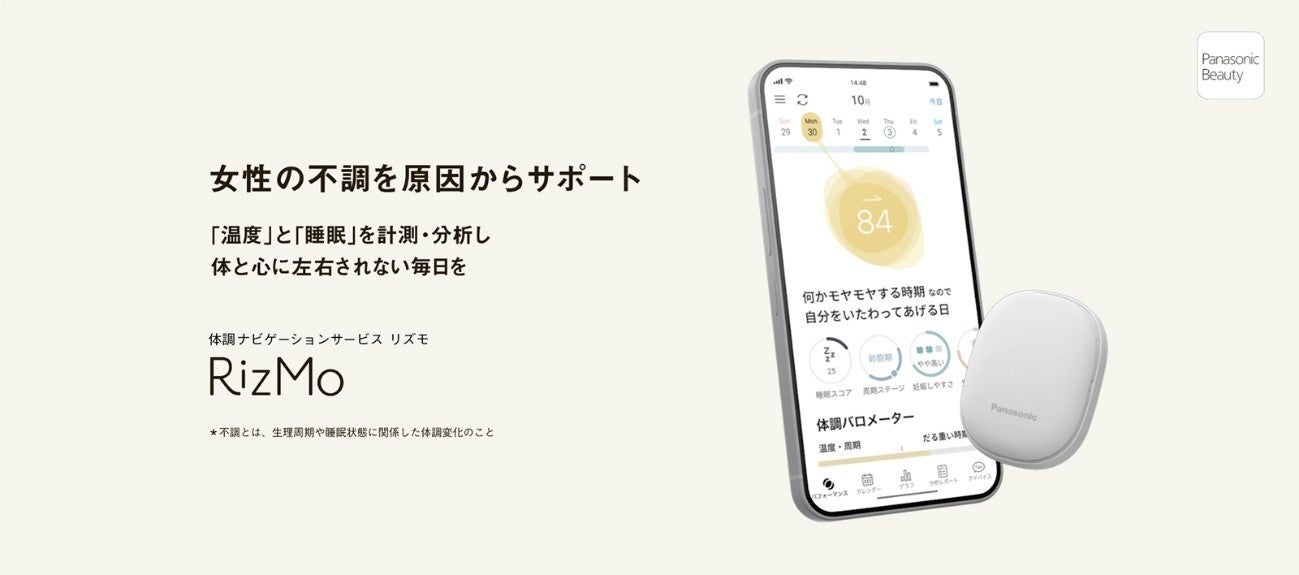
RizMo, a physical condition navigation service, is a useful tool for adjusting to the rhythm after a vacation.
Developed "Rhythm Monitor," a wearable device that can measure the temperature inside clothing and sleep conditions linked to menstrual rhythms. Through a dedicated application(*3) linked to the device, it is possible to check the measurement data, predict the physical condition of the day and the day ahead based on a proprietary data analysis algorithm, and receive advice on physical condition support tailored to one's own needs. It is also easy to record your physical and mental condition, just like a diary. In addition, a personal physical condition report for each menstrual cycle is automatically generated based on the measured and recorded data, allowing you to look back and objectively examine your physical and mental condition and trends.
Rizmo analyzes sleep rhythms, discrepancies from the previous day, sleep and wake times, and sleep quality, and visualizes daily sleep conditions in an easy-to-understand manner. Especially during periods when sleep patterns tend to be disturbed, such as long vacations, it is very useful for improving one's daily rhythm because it allows one to objectively grasp "how much is out of alignment" and "in what direction should adjustments be made today? Based on the data, personalized lifestyle advice to improve one's physical condition is also provided in conjunction with the data.
For more information on "RizMo" (Rizmo) and how to apply, please refer to the following URL.
URL:https://ec-plus.panasonic.jp/store/page/RizMo/
*1: Based on the total number of physical condition input items in Rizmo (period: July 2025 - January 2026)
2: A state in which actual sleep is insufficient for the required amount of sleep and the deficiency has accumulated.
*3: For iPhone only